A decade of federal funding
Ottawa and the provinces locked in a C$196 billion health deal to expand the healthcare workforce — with direct commitments to credentialing, hiring, and home-care capacity through 2033.
Source · Government of CanadaOver 6 million Canadians have no family doctor. We finance the international nurses, PSWs, and allied-health graduates stepping in to close that gap.
Canadians without a regular family doctor, as of 2024*
Source: Statistics Canada, Canadians without a regular healthcare provider (2024).
Three forces — demographic, economic, policy — are reshaping how Canada trains and retains healthcare workers. Here is the shape of the opening.
Ottawa and the provinces locked in a C$196 billion health deal to expand the healthcare workforce — with direct commitments to credentialing, hiring, and home-care capacity through 2033.
Source · Government of CanadaCanada is on track to be short more than 117,000 nurses before the end of the decade. Provinces are already fast-tracking international credentials and writing signing bonuses to bring graduates in.
Source · Conference Board of CanadaOne in five adults lives without a regular family doctor or nurse practitioner — the root cause of ER overcrowding, burnout, and delayed diagnoses. More trained staff is the only honest answer.
Source · Statistics CanadaA few of the most popular paths — every program we match you to qualifies for Canada’s Post-Graduation Work Permit pathway. Pick the one that fits your background and the kind of care you want to give.
Hands-on daily care for seniors and patients recovering at home, in long-term care, or in hospitals.
Provide bedside clinical care and medication management under a Registered Nurse or physician.
Lead patient care across hospital, community, and specialist settings — the backbone of Canada's health system.
Run the tests clinicians rely on to diagnose, monitor, and treat — from hematology to microbiology.
Prepare, dispense, and manage medications alongside licensed pharmacists in community and hospital settings.
First on scene in emergencies — triage, stabilize, and transport patients across urban and rural Canada.
Run the front office of clinics and hospitals — scheduling, records, billing, and patient coordination.
Support Canadians through mental-health recovery, addictions, and community wellness programs.
Programs shown are representative. Regulated roles (RN, RPN, MLT, Paramedic, Pharmacy Tech) also require provincial licensing exams after graduation — your Passage advisor walks you through the licensing path for your province.
Pick a role and a province to see a realistic median. Shift premiums, overtime, and specialty bands add to this — the number below is a conservative starting point.
Median earnings for a Registered Nurse in Ontario. Based on Job Bank hourly wage data, calculated over a standard work year.
Estimates only. Actual earnings depend on licensure, employer, hours, shift differentials, and specialty. This tool is for informational purposes and should not be relied upon as financial advice.

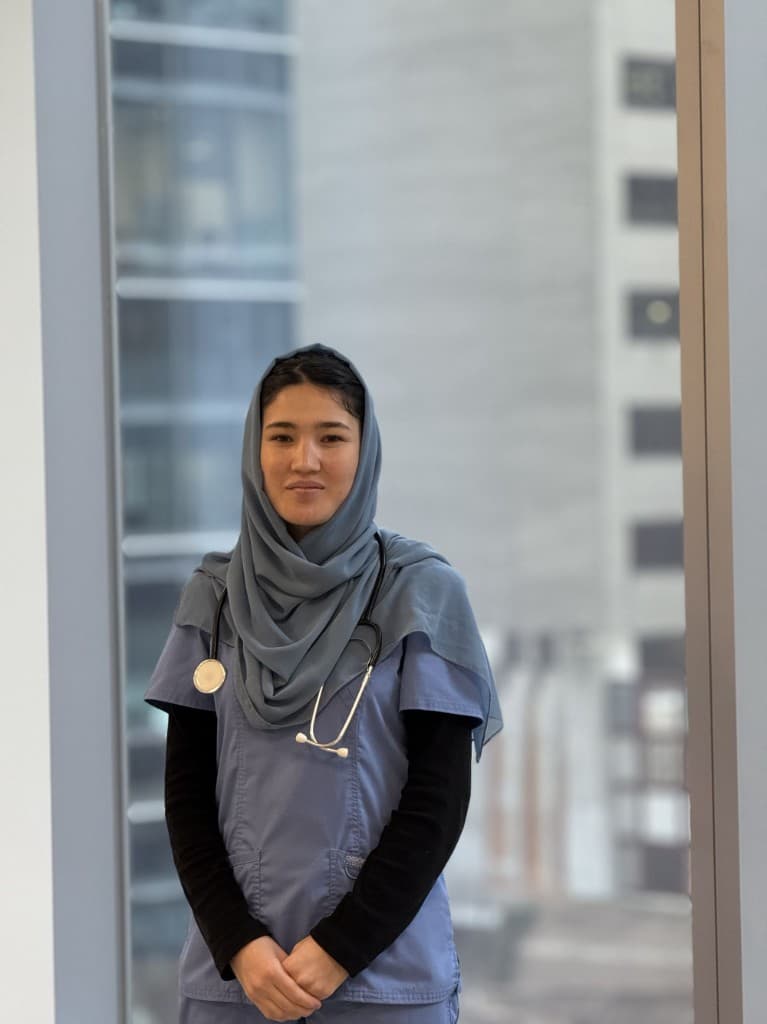
Alongside my studies, I am working part-time as a Nurse Assistant at one of Toronto’s hospitals. The work I do reminds me every day of the true meaning of humanity — offering compassion, understanding, and support when people need it most.
Four phases. One team. We tell you what’s next at every step so nothing falls through the cracks.
Map what you want to study with the careers Canada actually needs by sector and region.
Submit your application and our team will screen your documents and work with partner colleges for your offer letter.
We review your credit profile and secure your seat the moment your cash collateral comes through.
We connect you with independent RCIC-licensed professionals who handle the legal work.
* Referrals are made to independent RCIC-licensed professionals. Passage does not provide immigration advice or services.
Check eligibilityStill wondering about something specific to healthcare? Our team replies in plain English within one business day.
We fund PGWP-aligned programs across practical nursing (RPN/LPN), personal support work, medical laboratory technology, pharmacy technician, primary-care paramedicine, health office administration, and mental-health & addictions. We also finance BScN bridging programs for students who already hold a nursing credential abroad. Program options depend on your profile, preferred province, and intake.

Check your eligibility for top Canadian study programs and see if you qualify for a Passage loan.